
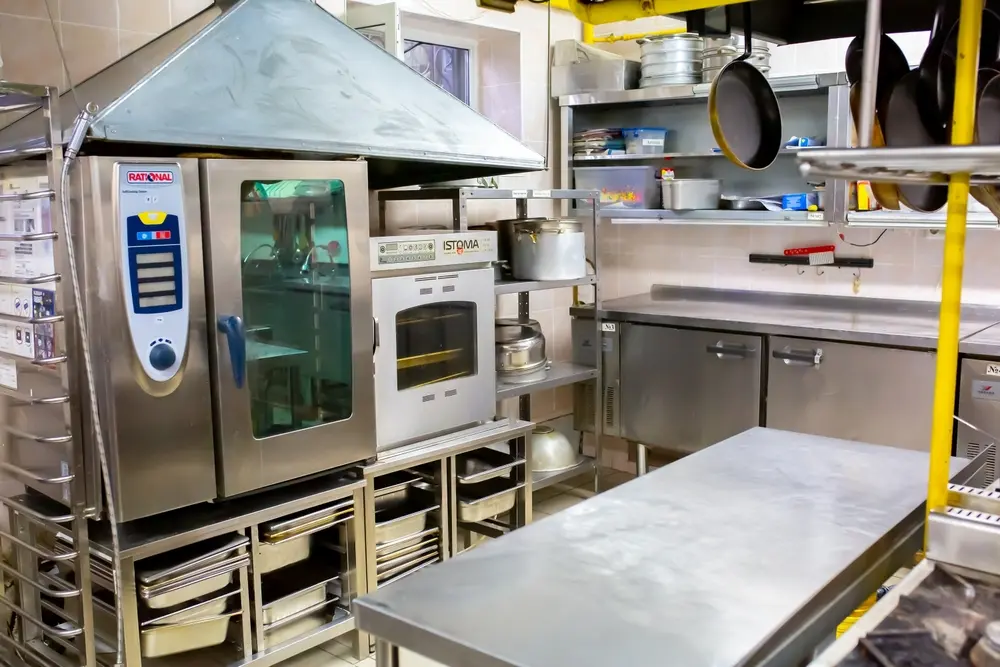
Opening or upgrading a commercial kitchen in Memphis can mean balancing equipment costs against reliability, utility requirements, available space, and the pressure to get your operation running. A lower purchase price can be attractive, but the right choice depends on much more than whether a range, fryer, refrigerator, or prep table is new or used.
Quick answer: New commercial kitchen equipment generally offers a longer expected service life, current features, and fewer unknowns, while used equipment can reduce upfront costs when its condition, specifications, and maintenance history are carefully evaluated. Memphis restaurant owners should also confirm that any equipment fits their kitchen layout, utility capacity, ventilation needs, and Shelby County food-service requirements before purchasing.
What local buyers should know
-
New equipment may cost more initially, but predictable condition can make budgeting for a new restaurant or major kitchen renovation easier.
-
Used equipment can provide strong value when its age, condition, service history, and operating requirements are known before purchase.
-
Shelby County food-service requirements can affect where cooking equipment, sinks, dishwashing systems, and ventilation equipment are installed.
-
Memphis operators should consider electrical demand, gas service, water connections, and ventilation instead of comparing purchase prices alone.
-
Equipment dimensions matter in compact restaurant spaces found in areas such as Cooper-Young, Overton Square, Downtown, and the South Main district.
Why Does the New vs. Used Equipment Decision Matter in Memphis?
The new-versus-used decision matters in Memphis because commercial kitchen equipment must work within the building, utility, ventilation, and operational realities of the property where it will be installed. A bargain is not much of a bargain if the appliance requires costly changes before it can safely and effectively enter service.
Restaurants around Cooper-Young, Overton Square, Broad Avenue, Beale Street, and Downtown can occupy buildings with very different layouts and infrastructure. Older commercial spaces may present tighter access points, existing utility configurations, or ventilation systems that limit which equipment can be installed without additional work.
The Shelby County Health Department also requires food-service operators to address equipment and facility details during plan review. Its published requirements call for adequate cooking, heating, and holding equipment and generally require applicable cooking equipment to be located under a vent hood.
At Southern Equipment Distributors, we believe the equipment decision should start with how the kitchen needs to operate, not simply which price tag is lowest.
What Should You Check Before Buying Used Commercial Kitchen Equipment?
Used commercial kitchen equipment should be evaluated for condition, age, functionality, utility requirements, and compatibility with the kitchen before money changes hands. In Memphis, buyers should also confirm that the equipment can work with the property’s existing electrical, gas, water, drainage, and ventilation setup.
Inspect or verify:
-
Model and serial information
-
Overall age and visible condition
-
Whether major components function properly
-
Signs of corrosion, leaks, overheating, or damaged wiring
-
Door seals, hinges, thermostats, controls, and burners
-
Required voltage, phase, amperage, gas type, or water connection
-
Exterior dimensions and required service clearances
-
Available maintenance or repair history
-
Availability of replacement parts
A used refrigerator that cools during a brief inspection may still have worn door gaskets or aging components. A used range may operate properly but require gas or ventilation changes that increase the total installed cost.
What Are the Advantages of Buying New Equipment?
New commercial kitchen equipment offers known condition, current specifications, and fewer uncertainties about previous use. For a Memphis operator building a new kitchen or replacing a mission-critical appliance, those advantages can make planning installation, maintenance, and daily production more predictable.
New equipment may be especially attractive for refrigeration, ice machines, dishwashing equipment, and appliances that will operate for long periods every day. Depending on the manufacturer and product, new units may also include warranty coverage, although buyers should always confirm the specific terms before purchasing.
Current equipment may offer improved controls or energy performance compared with much older models. That can matter for a high-use kitchen where refrigeration, cooking, holding, and warewashing equipment contribute heavily to monthly utility consumption.
When Can Used Commercial Kitchen Equipment Make Sense?
Used commercial kitchen equipment can make sense when the unit is in dependable condition, properly sized, compatible with the facility, and priced low enough to justify the additional uncertainty. It can be particularly useful for operators managing startup costs or replacing equipment without committing to the cost of a brand-new unit.
Simple equipment can sometimes be easier to evaluate than complex equipment with compressors, electronic controls, pumps, or multiple heating components. Stainless steel work tables, shelving, sinks, and certain prep equipment may have fewer mechanical variables than refrigeration or highly computerized cooking appliances.
The key is comparing total value, not merely the asking price. Purchase cost, transportation, installation, possible repairs, utility modifications, and expected remaining service life all belong in the calculation.
How Do Memphis Utility Requirements Affect Equipment Choices?
Utility requirements affect equipment choices because a commercial appliance must match the service available at the property and can change operating costs after installation. Memphis Light, Gas and Water provides electricity, natural gas, and water service throughout Memphis and Shelby County, making equipment specifications an important part of local kitchen planning.
MLGW explains that commercial electric charges can include consumption, demand, and a customer service charge. Demand reflects the highest electrical usage registered during a 30-minute period in the billing cycle, so adding high-load electric equipment can influence more than total kilowatt-hour consumption.
Before purchasing, verify whether the appliance requires electric or gas service, its voltage and phase, and its rated load. MLGW also maintains separate commercial rate schedules for electric, gas, and water service.
What Warning Signs Should Make You Avoid Used Equipment?
Used equipment should be approached cautiously when its history is unclear or inspection reveals problems that could turn a low purchase price into repeated repairs. Memphis buyers should be especially careful when a seller cannot provide enough information to verify that the unit matches the intended commercial application.
Warning signs include:
-
Missing or unreadable model and serial plates
-
Heavy rust or corrosion
-
Damaged electrical cords or connections
-
Oil, refrigerant, gas, or water leaks
-
Doors that do not close or seal correctly
-
Inconsistent temperatures
-
Unusual compressor, fan, motor, or bearing noises
-
Evidence of improvised wiring or previous modifications
Cosmetic wear alone does not necessarily make commercial equipment unsuitable. Problems involving electrical systems, refrigeration components, gas connections, structural damage, or food-contact surfaces deserve much closer attention.
When Should You Involve a Professional?
Professional input is appropriate before purchasing equipment when compatibility, installation requirements, electrical loads, gas connections, refrigeration condition, ventilation, or code-related questions are uncertain. A qualified evaluation can help determine whether an apparently inexpensive appliance will actually fit the kitchen and operate as intended.
This is particularly important during a new restaurant build-out or remodel. Shelby County Health Department guidance recommends submitting detailed plans for review before construction begins and advises operators to coordinate with building and zoning officials and City of Memphis officials regarding grease pits and traps.
Safe DIY evaluation can include checking dimensions, model information, obvious physical damage, and specification plates. Electrical, gas, refrigeration, and ventilation work should be left to appropriately qualified professionals.
What Common Buying Mistakes Should Memphis Restaurant Owners Avoid?
The most common equipment-buying mistakes come from evaluating the purchase price without evaluating the complete installation and operating requirements. For restaurants across Memphis and Shelby County, a better approach is to verify the kitchen first and compare equipment against the facility’s actual needs.
Mistake: Buying before measuring the space.
Consequence: The unit may not fit through doors, around corners, or beneath an existing hood.
Better approach: Measure the installation area, access route, clearances, and connection locations before ordering.
Mistake: Ignoring utility specifications.
Consequence: Installation may require electrical, gas, or plumbing changes.
Better approach: Match the equipment data plate to the services available at the property.
Mistake: Choosing used equipment on price alone.
Consequence: Repair costs and downtime can erase the initial savings.
Better approach: Consider condition, repair history, parts availability, and expected remaining life.
Mistake: Assuming similar-looking units are interchangeable.
Consequence: Two appliances of similar size may have very different capacity or utility requirements.
Better approach: Compare model specifications instead of appearance.
What Is a Common Local Equipment-Buying Scenario?
A common Memphis scenario is a restaurant operator taking over an existing food-service space and finding that some kitchen infrastructure is already in place. Keeping or adding used equipment may appear to be the fastest route, but each appliance still needs to be checked against the menu, production volume, existing hood, utility connections, and facility layout.
For example, a space near Overton Square or South Main may already contain a hood and gas connections. That does not automatically mean every used fryer, range, or oven will be appropriate for that setup.
Evaluating compatibility before purchase can help prevent a situation where inexpensive equipment triggers additional installation work or delays opening.
How Do New and Used Equipment Compare?
New and used commercial kitchen equipment solve different budget and operational priorities, so neither option is automatically better for every Memphis business. The stronger choice is the one that delivers the required capacity and reliability at a reasonable total cost over the period you expect to use it.
| Consideration | New Equipment | Used Equipment |
|---|---|---|
| Upfront cost | Usually higher | Often lower |
| Condition | Known | Requires evaluation |
| Service history | No prior commercial use | May vary |
| Remaining service life | Typically longer | Depends on age and use |
| Current features | More likely | Varies by model year |
| Installation compatibility | Must still be verified | Must still be verified |
| Repair risk | Generally more predictable | Can be less predictable |
| Best fit | Long-term, high-use needs | Budget-conscious purchases when condition is strong |
Many operators use a combination. They may invest in new equipment for mission-critical applications while considering dependable used equipment for less complex needs.
What Equipment Solutions Should You Consider?
The right equipment solution should support your menu, production volume, available space, utilities, workflow, and budget rather than forcing the kitchen to adapt around an unsuitable purchase. We recommend beginning with operational requirements and narrowing the choices only after the facility specifications are understood.
That process may involve evaluating cooking equipment, refrigeration, food preparation equipment, warewashing systems, stainless steel fixtures, storage, or other commercial kitchen needs.
What Areas Can Local Equipment Buyers Consider?
Memphis and the surrounding Shelby County market include restaurants, institutional kitchens, hospitality operations, and other food-service businesses with a wide range of equipment needs. Buyers may also be comparing equipment for operations in nearby Bartlett, Germantown, Collierville, and other Greater Memphis communities.
The building and utility conditions at the actual installation address should always guide the final equipment decision.
What Can It Cost to Choose the Wrong Equipment?
Choosing the wrong equipment can cost more than the difference between a new and used purchase because unsuitable equipment may create installation expenses, repairs, downtime, workflow problems, or premature replacement. For a busy Memphis kitchen, an unexpected equipment failure can also interfere directly with production during operating hours.
The goal is not to avoid used equipment or automatically spend more on new equipment. It is to understand the total cost and risk of each option before committing.
FAQ
Is new or used commercial kitchen equipment better for a Memphis restaurant?
Neither is automatically better. New equipment provides known condition and generally greater predictability, while carefully selected used equipment may reduce upfront costs. Memphis restaurant owners should compare total installed cost, expected use, reliability needs, utility requirements, and the consequences of downtime before deciding.
Can I install any used cooking equipment under an existing hood in Memphis?
No. Existing hood space alone does not establish that a cooking appliance is suitable for the installation. Equipment type, placement, ventilation requirements, clearances, fire-safety considerations, and applicable local requirements all matter. Shelby County guidance generally requires applicable cooking equipment to be located under a vent hood.
Should I check MLGW service before buying electric restaurant equipment?
Yes. Check the equipment’s voltage, phase, amperage, and load against the electrical service available at your property. MLGW commercial electricity billing can also involve demand in addition to consumption, so high-load equipment should be evaluated as part of the kitchen’s overall electrical requirements.
What used restaurant equipment is easiest to evaluate?
Equipment with fewer mechanical and electronic components may be simpler to evaluate, but every purchase still requires careful inspection. Stainless steel tables, shelving, and similar non-powered items generally present fewer operating variables than refrigeration, ice machines, dishwashers, or digitally controlled cooking equipment.
Does Shelby County review restaurant equipment during a new build-out?
Shelby County food-service plan review includes equipment and facility information for new or remodeled operations. Published guidance addresses cooking and holding equipment, handwashing and dishwashing facilities, ventilation, and other kitchen requirements. Operators should complete applicable reviews before committing to a build-out or major equipment installation.
Is used refrigeration a good choice for a Memphis restaurant?
Used refrigeration can be a reasonable purchase when its operating condition, temperature performance, age, service history, seals, compressor condition, and parts availability have been properly evaluated. Because refrigeration failures can immediately affect food storage and operations, buyers should weigh the savings against the risk and potential cost of downtime.
Should I buy equipment before signing a lease on a Memphis restaurant space?
Usually, it is better to understand the space before committing to major equipment purchases. Verify dimensions, hood configuration, electrical service, gas availability, plumbing, drainage, and other installation conditions first. Equipment that works well in one Memphis restaurant space may require significant modifications in another.
Can a lower-priced used appliance actually cost more than a new one?
Yes. A used appliance can become the more expensive option if it requires extensive repairs, utility modifications, specialized installation, or early replacement. Compare the purchase price plus transportation, installation, repairs, operating requirements, and expected remaining service life rather than using sticker price alone.
Make Your Next Kitchen Equipment Purchase Fit the Way You Operate
The best commercial kitchen equipment purchase is one that fits your Memphis facility, supports the demands of your menu, and makes sense beyond the initial price. We can help you compare your options without losing sight of installation requirements, reliability, and long-term operating needs.